
Capabilities
Digital Twin
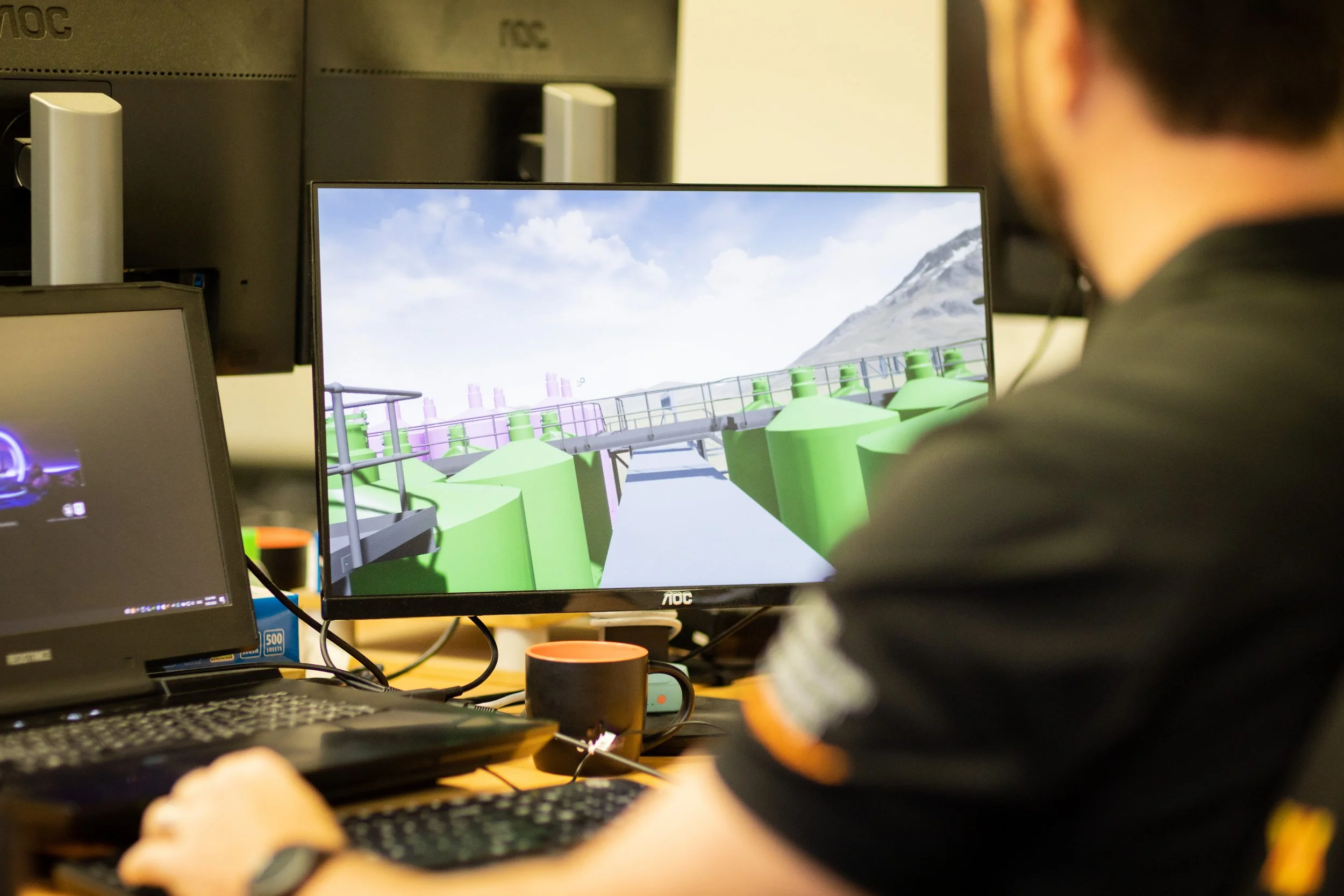
Ekium are the local leaders in digital twin technologies, creating applications and experiences for industry since 2015
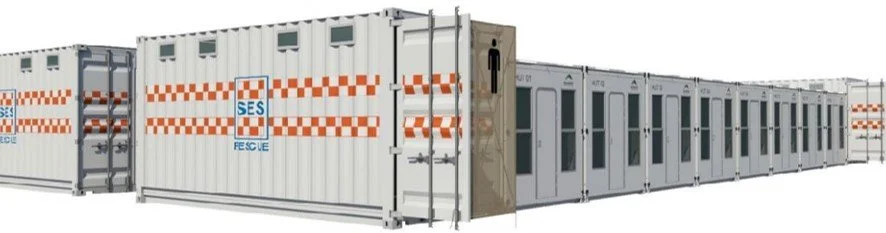
With a focus on getting the most out of your 3D data, our digital twin offerings include:
Virtual reality (VR) experiences
Augmented reality (AR) applications
Desktop monitoring and control applications
Using related technologies, we also offer:
Photorealistic Rendering & Animation
Web GL applications (3D geometry for web)
Digital Twin Capabilities
Extended Reality (XR)
Virtual Reality (VR)
Augmented Reality (AR)
Mixed Reality (MR)
Internet of Things
Artificial Intelligence
Information Management
Desktop Monitoring & Control Applications
Reverse Engineering
Use Cases
Procedure Instruction
Training/Education
Design Review
Marketing
Product Evaluation


Rendering & Animations
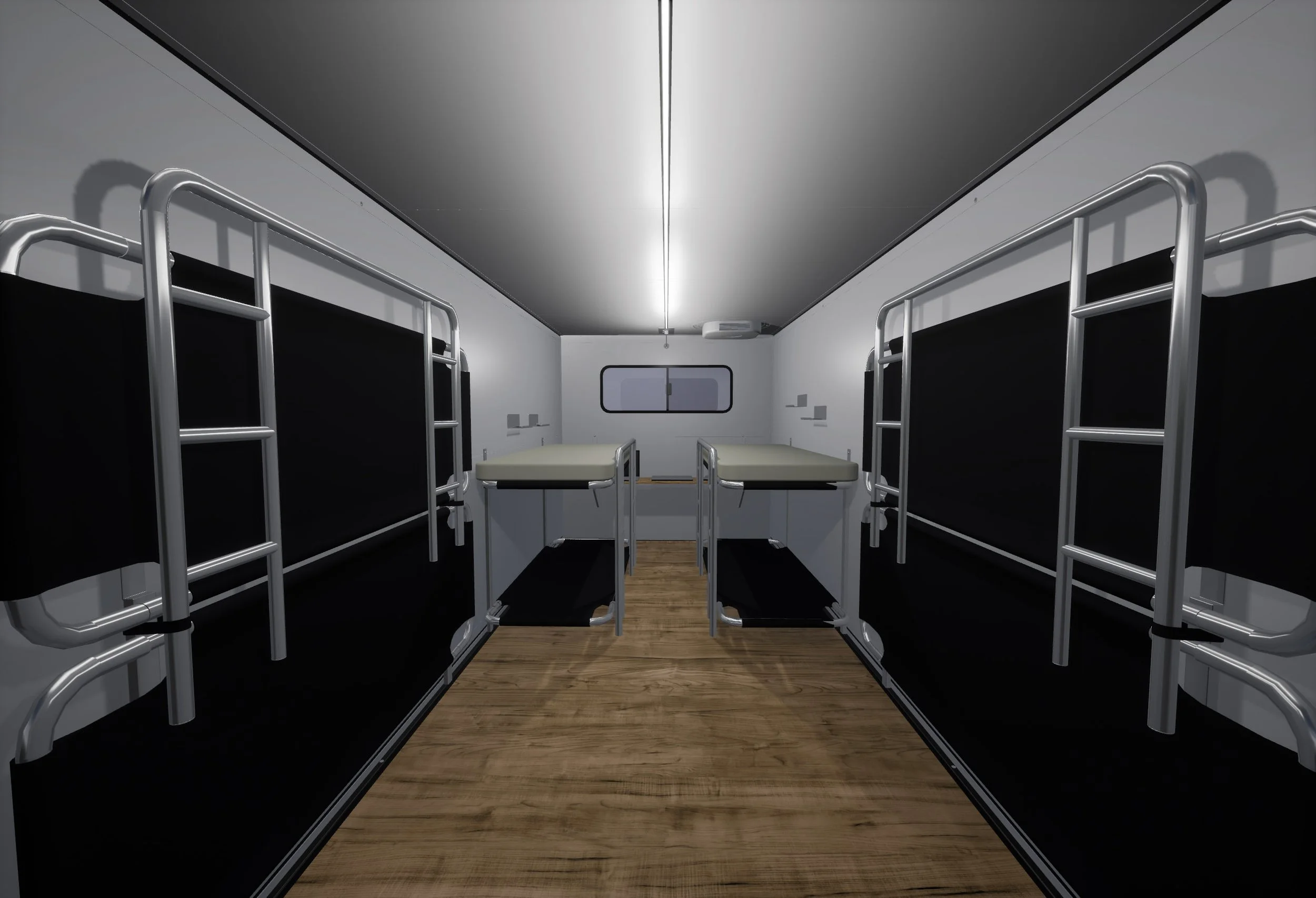
The software used to create the digital twin experience can also be useful for creating photo realistic animations and rendered images. The quality and realism of the outputs is very high, adding further value to the digital twin. Animations within the experience can be useful for simulation purposes, but animations can also be the primary output.
Using industry standard software packages, we work with our customers to develop 3D animations and 3D rendered images for use in tenders and bids, marketing and stakeholder communications and assembly manuals.
Our animations and renderings can also be incorporated into our Virtual Reality simulations.
Many of the digital twin applications developed by Ekium have incorporate interactivity, real data and simulation of activities.
In a complex digital twin the data inputs and outputs may vary depending on the use case. Complex information management systems add the ability to obtain all information from one source. In such a scenario the digital twin becomes a collection of all relevant data to the product or project.
Virtual Reality
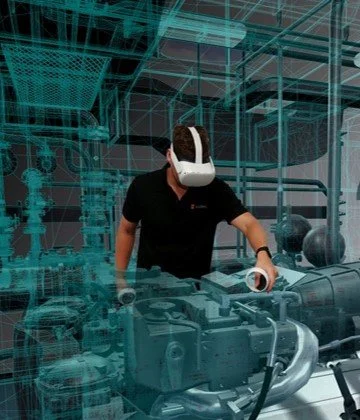
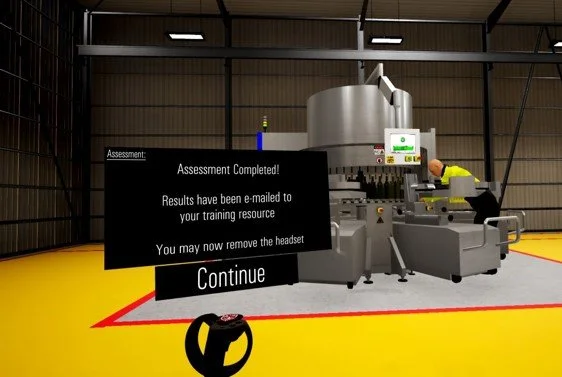
Virtual Reality is a fully immersive experience where the user can view an entirely virtual environment at 1:1 scale.
This immediately offers the user the opportunity to examine equipment that has been partially designed for review purposes. It also offers the opportunity to review existing facilities that have been scanned, by examining the point cloud directly. This is particularly useful for dangerous environments where the user can examine data in safety.
New assets can be imported from CAD for design review. In some cases, including point clod data along with the 3D CAD allows the two to be reviewed together.
With multiple users able to connect and communicate within the environment it is possible to discuss different aspects of the project in real time.
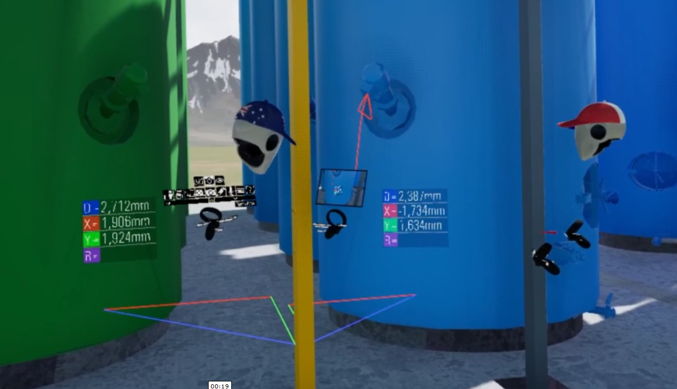
With multiple users able to connect and communicate within the environment it is possible to discuss different aspects of the project in real time . Users may be in the same room or on opposite sides of the world.
Augmented Reality
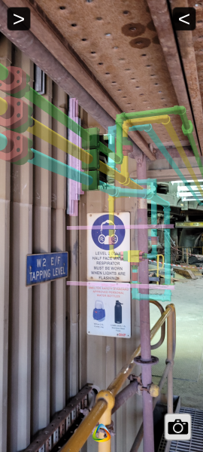
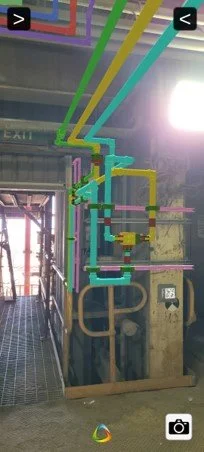
Ekium have developed a BIM analysis tool that allows the user to examine virtual objects placed over the real-world object for visual comparison. This can be useful for previewing objects that have not been designed yet, as if placed in the real environment. It is also possible to have a secondary review to compare the ‘as built’ product against the original design to make sure it was built correctly.
Objects can be grouped together based on BIM data and hidden as a group. This helps provide clear visualization of other objects against the real-world items. It is also possible to fade the virtual objects to reveal the real-world objects, allowing both to be viewed at the same time for direct comparison.
What is a digital twin?
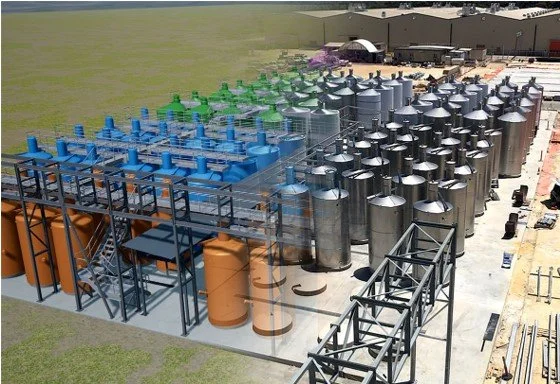
In its simplest terms, a digital twin is a digital representation of a real-world object. There is no single definition of a digital twin because of the large variation in real world objects that can be represented.
Ekium has a focus on industry, but that doesn’t reduce the variation of what makes up a digital twin very much. Factors that affect the make up of the digital twin include:
The industry. By the nature of the product, requirements can vary a lot
The scale of the project
Market needs
The simplest form of a digital twin application is a pure physical representation of the 3D object. This is essentially a lightweight viewer for the 3D geometry, external to the CAD system used to design it. A single app could be PC based with a user interface and may implement VR or AR.
More complicated analysis can be performed by adding interactivity and animated motion to the physical 3D data. This is a very common usage in industrial applications because it shows how objects operate together and demonstrates functionality.
From here the complexity can increase immensely with the inclusion of different forms of data such as manufacturing information and BIM. Communication with devices and presentation of data can make the digital twin application much more complicated.
As the complexity of the digital twin increases, a distinction needs to made between the digital twin data and the application. As the complexity of data increases, the possibility that multiple applications will be required increases. Simple applications containing a subset of the project may be required for different uses. For example, a desktop application may be used for data monitoring, while separate VR and AR apps may be used for specific stages of the design process.
In all cases, there is flexibility in digital twin applications and the output reflects the needs of the end user and the customer.
Other Services
Web-Based Product Configurator and Visualization
Digital Human Mannekins for Ergonomic. Human-Centric Design
Hardware Integration & Unified Namespace
Design Renderings and Animations
3D Printing (Resin & FDM)
Reverse Engineering